Ghost Greeting Card: A Practical Embroidery Designer’s Review
First Impressions: Cute, Playful, and Perfectly Themed
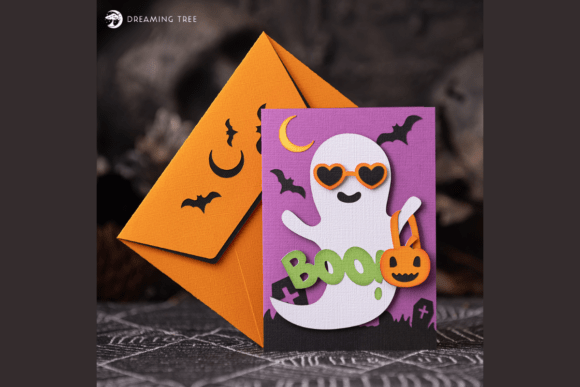
Opening the Ghost Greeting Card SVG file, the first thing I noticed was the whimsical charm. It’s a fun, slightly spooky design that doesn’t go overboard with the Halloween theme. The ghost peeking out from behind the pumpkins gives it a sense of movement and interaction, which is a nice touch for a 3D paper card concept. As a designer, I immediately thought about how this could translate into an embroidered patch or a custom tote bag — especially for a small shop looking to offer seasonal items with personality.
Real-World Use: From Sweatshirts to Holiday Gifts
I tested the Ghost Greeting Card in a few different embroidery applications. Starting with a medium-weight cotton tote bag, the design held up well with standard stabilizer and basic thread colors. The ghost’s eyes and mouth are simple but expressive, which makes it easy for customers to connect with the design emotionally. I also stitched it onto a kids’ sweatshirt — the result was adorable, and the 3D elements translated nicely into layered embroidery without being too bulky.
For a Halloween-themed baby onesie, I scaled the design down slightly and used a lightweight stabilizer. It came out clean and soft, which is important for baby embroidery. I could easily see this being a hit in Etsy shops that focus on personalized baby gifts or boutique Halloween apparel.
Design Performance: Clarity, Detail, and Fabric Considerations
One thing I appreciated was the clean separation of elements. The ghost and the surrounding accents don’t bleed into each other, which is crucial when working with fill stitch and satin stitch combinations. The level of detail is just right — not too busy to cause thread breaks, but still expressive enough to stand out on a finished product.
However, I noticed that on stretchy knit fabric, the design needed a bit more density in the outline to keep the ghost’s shape crisp. For dark fabrics, I had to tweak the thread color contrast to ensure the ghost remained visible. If you’re planning to use this on a curved surface like a baseball cap, be sure to test the hoop placement and adjust the stabilizer accordingly.
Where to Use It Carefully — and Why
While Ghost Greeting Card is versatile, it does have some limitations. I wouldn’t recommend it for very small hoop sizes — the ghost’s facial features start to blur if scaled down too much. On textured fabrics like burlap or felt, some of the finer details get lost, so it’s better suited for smooth or lightly textured materials.
Also, if you’re planning to use this for a layered garment or a product that will be washed frequently (like a kitchen towel or baby blanket), be sure to check the stitch density and thread durability. The corners of the design are fairly detailed, so they may require extra support if stitched on thin or stretchy fabric.
Visual Impact: From Embroidery to Branding
What really sets Ghost Greeting Card apart is its visual appeal. It’s not just a Halloween design — it’s a design that tells a story. The ghost feels like it’s peeking out at you, which adds a bit of interactivity. This makes it great for personalized gifts, especially when combined with a name or short message.
From a branding perspective, this design could work well for small craft businesses or Etsy sellers who want to maintain a consistent seasonal theme without sacrificing quality. It has a handmade feel that’s still polished enough to look professional in product photos and digital mockups.
Practical Notes for Embroidery Designers
Before using Ghost Greeting Card in a real project, here are a few things I recommend:
- Test on scrap fabric — especially if you’re using it on a new material or garment type.
- Check thread color contrast — particularly for dark fabric backgrounds.
- Review stitch density — especially if you’re stitching on stretchy or thin fabric.
- Confirm hoop size compatibility — don’t assume it will fit in a small hoop without scaling.
- Inspect small details — the ghost’s eyes and mouth are delicate, so they may need reinforcement.
- Test in black and white mockups — to see how the design reads without color.
- Compare light and dark fabric backgrounds — to ensure visibility and contrast.
- Use proper stabilizer — especially for stretchy or textured materials.
- Check licensing — if you’re selling finished items or digital products, make sure the file allows commercial use.
Final Thoughts: A Solid Choice for Seasonal Embroidery
Ghost Greeting Card is a well-balanced design that works across multiple embroidery applications. It’s cute without being too childish, spooky without being scary, and detailed without being overly complex. Whether you’re creating a custom embroidered sweatshirt for a boutique or a Halloween-themed patch for a craft fair, this design has enough flexibility to fit your needs — as long as you take the time to test and adjust it for your specific project.
As a designer who evaluates a lot of embroidery files, I’d say this one earns its place in a seasonal design collection. Just be mindful of fabric type, hoop size, and thread choices, and you’ll get a polished, professional result every time.